


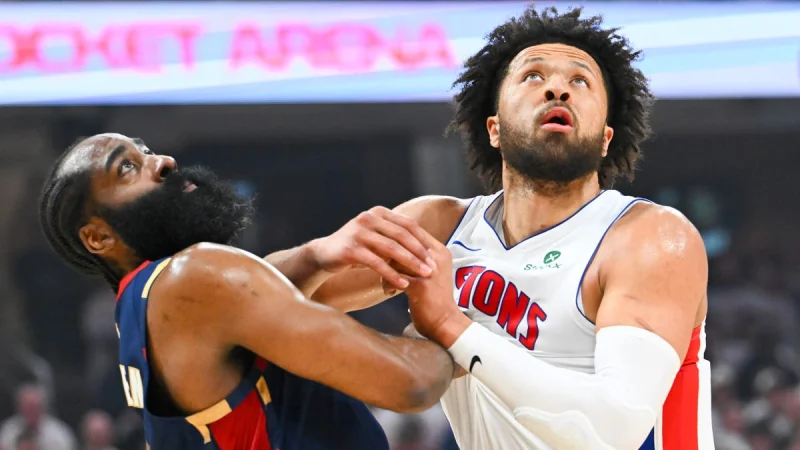
Cade Cunningham shrugged off the latest setback Saturday night in Cleveland after the Detroit Pistons lost Game 3 of their Eastern Conference semifinal to the Cavaliers. “It is what it is,” Cunningham said after a finish in which three late turnovers helped undo a comeback from a 17-point deficit.
That loss was not one play but a sequence. With two minutes left in the third quarter, J.B. Bickerstaff tried to pull Cunningham after a poor transition pass to Paul Reed, but officials would not let Daniss Jenkins check in at that moment. Cunningham stayed on, then turned it over again and Max Strus turned the mistake into a fastbreak layup. On the inbounds pass after that, Cunningham hit the back of the stanchion for another turnover, a stretch he later called “bad plays” on his part.
The frustration made sense because Bickerstaff had already seen this problem before. Earlier in the Orlando series, he noticed Cunningham fading late in games and changed his substitution pattern, beginning in Game 5 by resting him six minutes into the first quarter. The move worked: the Pistons won their next five games. Cunningham had also missed a few weeks with a collapsed lung before returning in the playoffs, so the team has been managing his minutes and his stamina at the same time.
That is the backdrop for a series that still feels within Detroit’s reach despite the loss. The Pistons and Cavaliers have looked more or less equal in talent, which is why Cunningham’s mistakes carried so much weight and why the margin for error has been so thin. When he is on the floor late, Detroit needs him to steady the game; when he sits, the bench has to hold it together long enough for him to return.
That is where Jenkins comes in, and where the balance has not been easy for Detroit. He had already been critical to the Pistons’ first-round turnaround against Orlando and played electric ball in the first two games of that series, but he has struggled to shoot and struggled to make plays against Cleveland. In the second half Saturday, he even tossed an elbow at Dennis Schröder in frustration over being closely guarded. Schröder embellished the contact, which led to a foul call and an official review for a flagrant, though the contact itself was not a flagrant.
For Detroit, the next step is plain enough: Cunningham has to clean up the late-game possessions, and the Pistons need their secondary ball-handling to survive when Bickerstaff tries to buy him a few breaths. Game 3 showed how narrow the line is. It also showed that this series is still there for the taking if Detroit can stop giving Cleveland the possessions that decide it.