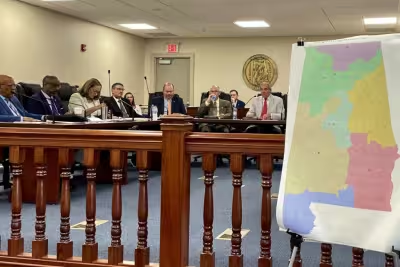


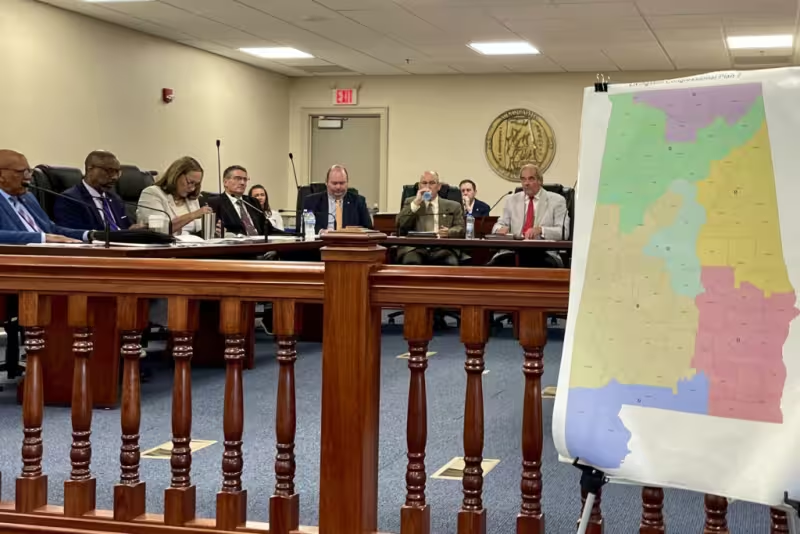
The U.S. Supreme Court has allowed Alabama to use a different congressional map for this year’s elections, clearing the way for the state to discard the court-ordered map it had been set to use in the 2026 primary elections. The order means Alabama will instead use a 2023 map that courts previously struck down as a violation under Section 2 of the Voting Rights Act.
The move follows the Supreme Court’s landmark ruling in Louisiana v. Callais last month, a decision that gutted the Voting Rights Act and made it much harder for minority voters to prove that election maps unlawfully dilute their voting power. After that ruling, Alabama Gov. Kay Ivey called a special session even though voters had already begun casting absentee ballots in the May 19 primary election.
Lawmakers raced to pass legislation authorizing a new election for congressional and state senate seats, while state officials quickly filed requests with the Supreme Court asking it to speedily lift the injunctions blocking use of the challenged map. Voting rights advocates responded with briefs urging the justices not to rush through the decision, arguing the state should not be allowed to swap maps after voting had already started.
The court’s order settles only part of the fight. Two Alabama congressional redistricting cases are still pending before the Supreme Court, and a separate challenge to the state senate map remains before the U.S. Court of Appeals for the 11th Circuit. The order also does not affect the injunction on the state legislative map, leaving Alabama with one map cleared for this year’s congressional elections and another still tied up in court.
For now, the state has won the immediate ability to move ahead with the 2023 map, but the broader fight over Alabama’s political lines is still not over.