


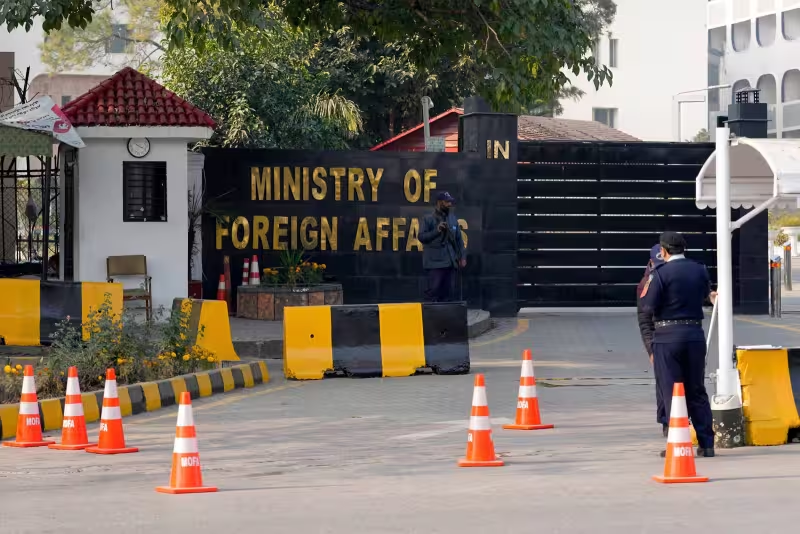
Pakistan is facing new questions after a report said Iranian military aircraft were allowed to park at its airfields during the recent U.S.-Iran showdown, even as Islamabad was trying to act as a diplomatic intermediary between Washington and Tehran. U.S. officials said multiple Iranian aircraft were sent to Pakistan Air Force Base Nur Khan, a strategically important installation outside Rawalpindi.
The aircraft reportedly included an Iranian Air Force RC-130, according to the report. A senior Pakistani official rejected the claim involving Nur Khan Air Base and said a large fleet of aircraft parked there “can’t be hidden from [the] public eye.”

The allegation lands at a delicate moment for Pakistan, which has long tried to keep a balance between its security relationship with the United States and its ties to neighboring Iran. The country shares a roughly 565-mile border with Iran, and its location near Iran, Afghanistan, India and China has made it an increasingly important regional partner for U.S. officials.
The report also raises a sharper question: whether Pakistani territory may have provided temporary sanctuary to Iranian military aircraft during a period of instability around the Strait of Hormuz. U.S. naval forces and commercial shipping companies stayed on heightened alert after weeks of military escalation involving Iran, with oil flows through the strait averaging 20 million barrels per day in 2024, equal to about 20% of global petroleum liquids consumption, according to the U.S. Energy Information Administration.
For Islamabad, the immediate issue is not only whether the aircraft landed there, but what the episode says about how it handled a crisis that put its regional role under a brighter light. Pakistan’s attempt to keep both Washington and Tehran in play has long been a balancing act, and this report has now made that act harder to ignore.