


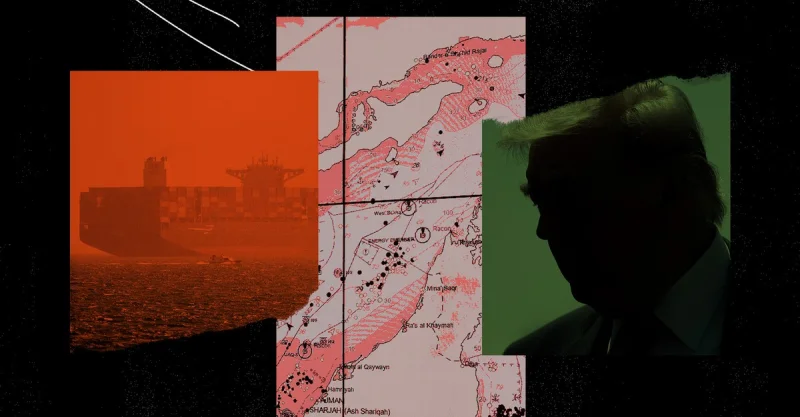
Robert Kagan says Washington cannot reverse or control the consequences of losing the war with Iran, a defeat he argues is already reshaping the region and will not simply fade away. In a new Atlantic article titled Checkmate in Iran, Kagan says there is no return to the status quo ante if the United States is beaten in the confrontation, and that the Strait of Hormuz will not be open as it once was.
The warning lands after 37 days of U.S. and Israeli strikes that, by Kagan’s account, killed much of Iran’s leadership and destroyed the bulk of its military, yet still failed to collapse the Iranian regime or win even the smallest concession from it. That failure matters now because it comes with a political fight in Washington over whether to keep striking or stop, and because any answer will shape what Iran does next at sea and across the Gulf.
The turning point came on March 18, when Israel bombed Iran’s South Pars gas field and Iran retaliated by attacking Qatar’s Ras Laffan Industrial City, the world’s largest natural-gas-export plant. The damage to production capacity there will take years to repair. After that, Trump declared a moratorium on further strikes against Iran’s energy facilities and then declared a cease-fire, despite Iran not having made a single concession.
Kagan’s argument is that this is not the kind of setback the United States has absorbed before. He points back to the opening months of World War II, when the United States suffered losses at Pearl Harbor, the Philippines and across the Western Pacific, and to Vietnam and Afghanistan, where costly defeats did not permanently damage America’s place in the world. This war with Iran, he says, is different because the damage cannot be repaired by pretending it never happened.
He says an Iran that controls the Strait of Hormuz would emerge as a key player in the region and one of the key players in the world, with China and Russia strengthened as its allies and the United States substantially diminished. Far from showing American power, he writes, the conflict has revealed an America that is unreliable and incapable of finishing what it started.
The pressure for more fighting is not over. Supporters of the war are calling for the resumption of military strikes, but Kagan argues that another round of bombing would push Iran to retaliate against neighboring Gulf states and would not force the Tehran government to buckle through economic pain alone. Suzanne Maloney’s warning cuts in the same direction: “A regime that slaughtered its own citizens to silence protests in January is fully prepared to impose economic hardships on them now.” For now, the hard question is not whether Iran can be punished again, but whether Washington has already discovered the limits of what force can do.