


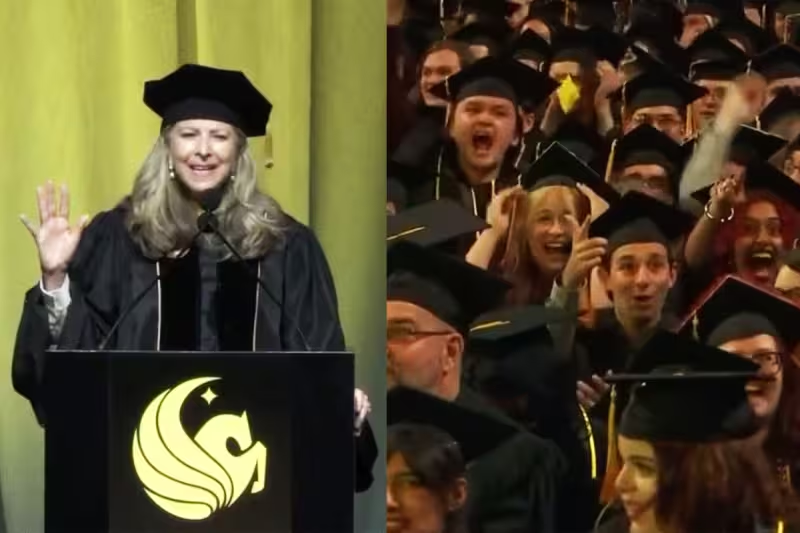
Gloria Caulfield, this year’s commencement speaker at the University of Central Florida, was booed and jeered by students on stage after telling graduates that the rise of artificial intelligence is the next Industrial Revolution. Caulfield, the vice president of strategic alliances for Tavistock Development Company, stepped away from the podium after the noise and asked, “What happened?”
The reaction came as Caulfield told the crowd, “we are living in a time of profound change,” adding that change is “exciting, very exciting,” but can also be “daunting.” When she said that only a few years ago AI was not a factor in people’s lives, students cheered, then booed again when she followed with the line that AI capabilities are now “in the palm of our hands.” She answered the outburst with a smile: “Passion! I love it.”
The two-minute clip quickly went viral, turning a graduation speech into a larger argument about a technology that has become a source of unease for many young people. A March survey found Americans are more likely to approve of Immigration and Customs Enforcement than AI, and a recent Gallup poll found that 48 percent of Zoomers believe the risks AI poses to the workforce outweigh its potential benefits.
That skepticism lands at a moment when the job market for new graduates is already bleak, computer science degrees are increasingly fraught and companies across industries are racing to automate entry-level roles with AI tools. The loud reaction at UCF made that tension visible in real time: Caulfield was pitching AI as a force of transformation, while the students hearing her were reacting like people who expect to live with the consequences first. The clip did not show a crowd rejecting technology in the abstract; it showed graduates pushing back against the version of the future being sold to them from a podium.
For Caulfield, the episode answered its own question. She said she must have “struck a chord,” and the response suggested she did exactly that. The speech went viral because it captured the divide in one blunt exchange: older optimism about AI’s promise colliding with a generation that is openly worried about what it will cost them.