


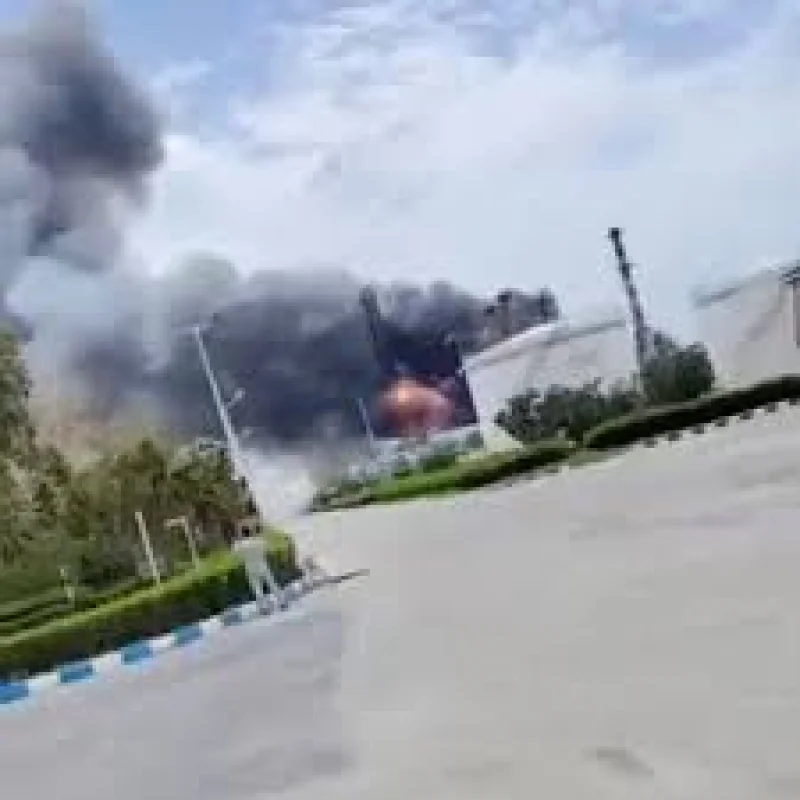
The United Arab Emirates said on Friday that its air defences were dealing with missile and drone attacks from Iran as the United States and Iran exchanged fire in the Strait of Hormuz, the most serious test yet of their month-long ceasefire.
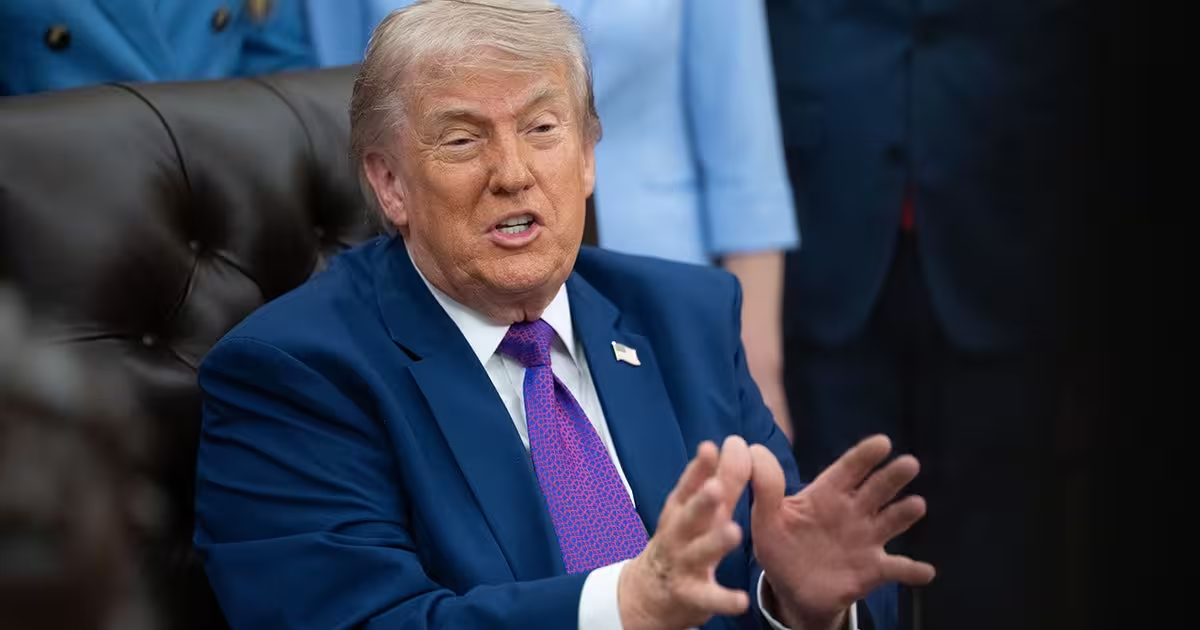
Donald Trump called the US strikes a “love tap,” then warned Tehran that Washington would hit “a lot harder and a lot more violently” if Iran did not quickly agree to a peace deal. He said negotiations with Tehran were continuing and described the outlook as “very good,” even as the fighting widened in the waterway that carries much of the world’s trade.
The clash followed a sharp exchange on Thursday, when the US said Iranian attacks were directed at three US warships transiting the strait. Iran accused the United States of violating the truce by targeting two ships in the waterway and attacking civilian areas, while the US said it struck Iranian targets in retaliation for unprovoked attacks on its warships.
On the Iranian side, state media reported loud noises and what it called defensive fire in western Tehran, and explosions were heard near Bandar Abbas in the south. The brief, violent sequence fed a broader sense that both capitals were testing how far they could push before a political break, or a wider military one.
The shock spread quickly into markets. Stocks sank and oil prices leapt on Friday as the clashes jolted hopes for a deal to end the war and reopen the waterway. About 1,500 ships and their crews are trapped in the Gulf because of the Iranian blockade in the Strait of Hormuz, according to the UN’s International Maritime Organisation.
Even so, one oil tanker made it through. A Malta-flagged vessel called Odessa arrived in South Korea on Friday carrying 1m barrels of crude oil, the first such ship to reach the country by that route since Iran declared the waterway closed on 14 and 15 May.
The episode leaves the ceasefire intact on paper but badly damaged in practice. With drones, missiles and warships already in motion, the next move depends on whether the two sides want to keep talking faster than they keep firing.