


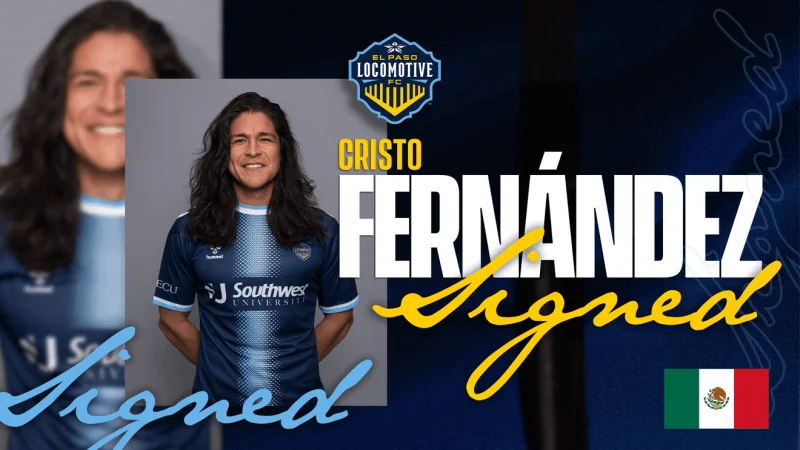
El Paso Locomotive FC signed Cristo Fernández on Tuesday, pending league and federation approval, after the actor and former youth player completed a two-month trial with the club. Fernández trained regularly with the squad during that period and even featured in a preseason match against New Mexico United.
The move sends the man widely known for playing Dani Rojas in Ted Lasso back toward professional soccer after years away from the game. Fernández began in the youth ranks of Tecos FC in Mexico, but stepped away from soccer at age 15 because of injury before later turning to acting and finding international fame.
For El Paso, the signing is about more than novelty. The club has added a recognizable name to a 2026 roster it is still shaping, and head coach Junior Gonzalez said Fernández strengthens the attack while bringing leadership to the locker room. Gonzalez described him as a useful addition who adds another threat up front and helps the team build the positive culture it wants.
Fernández has spoken openly about how the move fits the unfinished part of his own story. “Fútbol has always been a huge part of my life and identity, and no matter where life has taken me, the dream of competing professionally never truly left my heart,” he said. He added that he was grateful to El Paso for giving him the chance to compete from day one and said the comeback is about believing in yourself, taking risks and continuing to chase dreams even when the path is unexpected.
There is still one formality between the announcement and Fernández actually taking the field for the Locos in league play: approval from the league and federation. But after two months of training with the group and one preseason appearance already behind him, the club has made clear it sees him as more than a publicity move. It is betting that his return to the game can help on the field, and Fernández has made his own view just as plain: the road back is real, and he intends to keep going. “Maybe I’m just a crazy man with crazy dreams so being here with the ‘Locos’ actually makes perfect sense,” he said. “¡Vamos Locos!”