


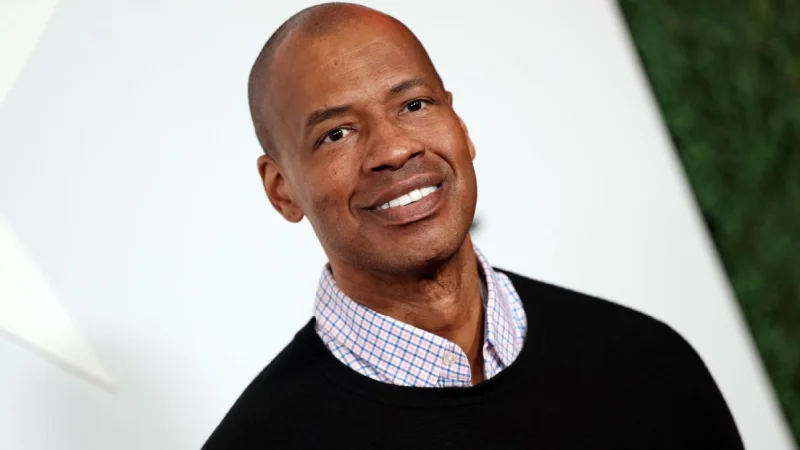
Jason Collins, the NBA’s first openly gay player, died Tuesday at 47 after a battle with brain cancer. His family said he died peacefully at home, surrounded by loved ones, after the cancer returned.
“We are heartbroken to share that Jason Collins, our beloved husband, son, brother and uncle, has died after a valiant fight with glioblastoma,” his family said in a statement. “We are grateful for the outpouring of love and prayers over the past eight months and for the exceptional medical care Jason received from his doctors and nurses.”
Collins had been diagnosed with Stage 4 glioblastoma in November and later traveled to Singapore in the winter for experimental treatments not yet authorized in the United States. Those treatments allowed him to return home and attend NBA All-Star Weekend events in Los Angeles and a game at Stanford before the disease came back in recent weeks.
His death closes the life of a player whose name became part of sports history far beyond his box scores. Collins retired in 2014 after a 13-year NBA career and had served as a global ambassador for the sport for the past decade, working as an NBA Cares Ambassador and speaking often about inclusion, access and visibility in a league that had not seen an openly gay active player before him.
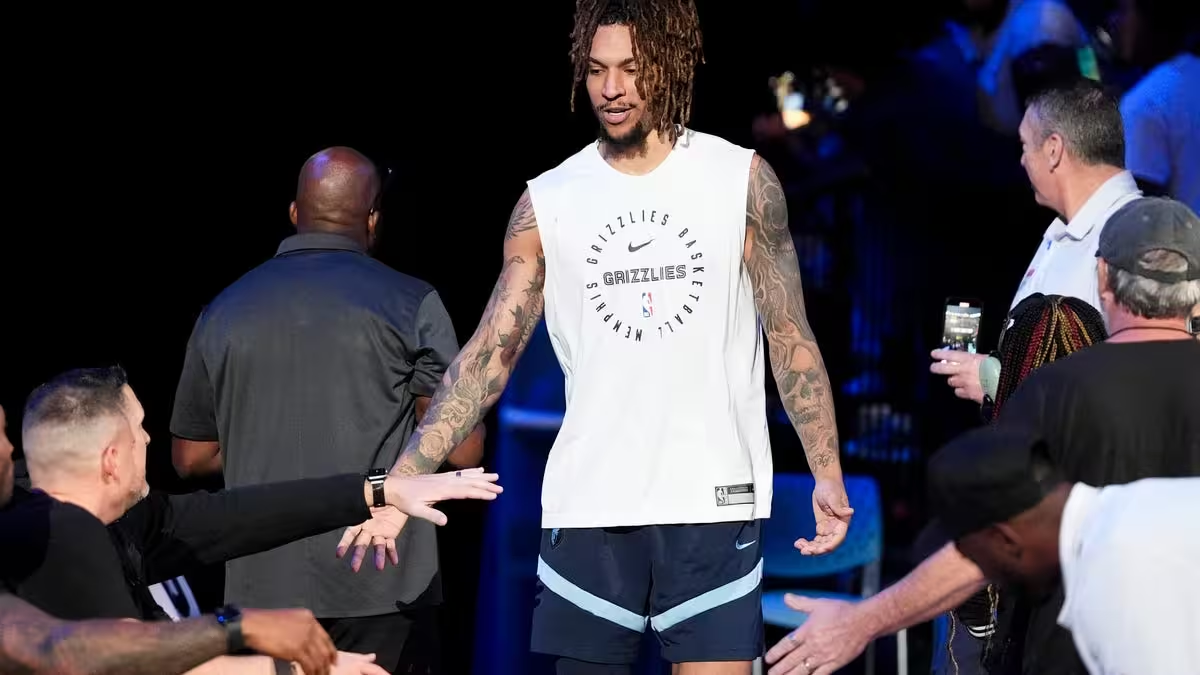
He announced in 2013, in a Sports Illustrated cover story, that he was gay, becoming the first publicly gay athlete to play in any of the four main North American sports leagues. Collins later said, “When I chose to come out, there was no scandal or anything,” and added that he wanted to say, “This was like, I feel that I am good enough to play in the NBA and by the way, I'm gay. Just so everyone knows cards on the table, this is where I am.”
On the court, Collins built a long role-player career after the Houston Rockets selected him with the 18th pick in the 2001 NBA draft. He spent time with the New Jersey Nets, Memphis, Minnesota, Atlanta, Boston, Washington and the Brooklyn Nets, and in the 2002-03 season he and Jason Kidd were teammates on the Nets team that reached the NBA Finals. He played 22 games for Brooklyn in the 2002-03 stretch noted in the record, and his return to the Nets that year carried extra meaning for him. “Thankfully the Nets were the one team that gave me a tryout,” he said later.
Before the NBA, Collins starred at Stanford, where he made nearly 61% of his shots and earned honorable mention All-America recognition from The in 2001. That efficiency helped make him a steady pro, but it was his decision to come out that changed the sport’s landscape. Collins said after the public announcement that he had received back-to-back calls from Oprah Winfrey and President Barack Obama, and recalled Obama telling him, “Congratulations -- what you've done today will have a positive impact on someone you might not ever meet in your lifetime.”
NBA commissioner Adam Silver said Collins’ “impact and influence extended far beyond basketball as he helped make the NBA, WNBA and larger sports community more inclusive and welcoming for future generations.” Silver added that he “exemplified outstanding leadership and professionalism throughout his 13-year NBA career and in his dedicated work as an NBA Cares Ambassador,” and said, “Jason will be remembered not only for breaking barriers, but also for the kindness and humanity that defined his life and touched so many others.” For a player who spent years doing the work quietly, the final measure of his life may be simple: he changed what was possible, and he did it in public.