


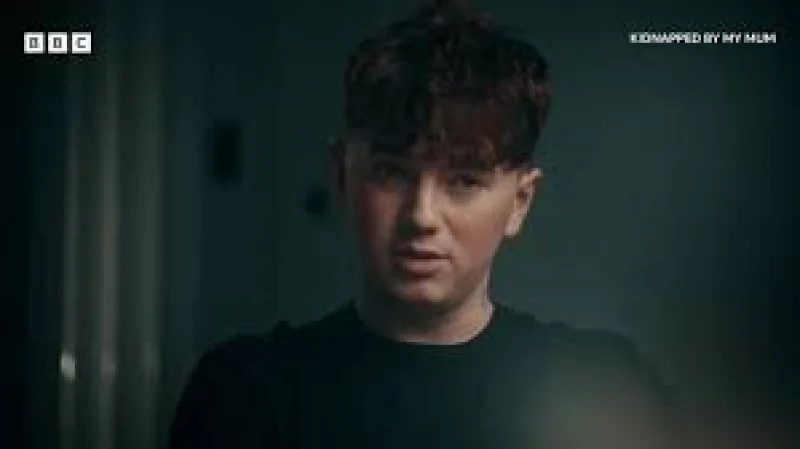
Alex Batty has contacted his mother for the first time since returning to the UK in 2023, reopening a relationship shaped by his disappearance, his years on the run and the questions that still hang over what happened to him. The young man, now a father himself, said the decision came after taking part in a new documentary that pushed him to reach out again.
Batty was declared missing in 2017, when he was 11, after he did not come back from a holiday in Spain with his mother, Melanie, and his grandfather, David. He was later found in France after years away from home, and the new account of his life fills in how he ended up there: his mother was not his legal guardian, was heavily influenced by conspiracy theories and told him to throw away his passport.
The story begins years earlier, when Melanie became engrossed in the sovereign citizen movement and the family home was repossessed when Batty was eight. After that, she sold all her belongings and took Alex and David to Morocco, where they lived with like-minded people for six months before running out of money and returning. Batty then moved in with his grandmother, Susan, who was given legal responsibility for him despite Melanie’s disapproval.
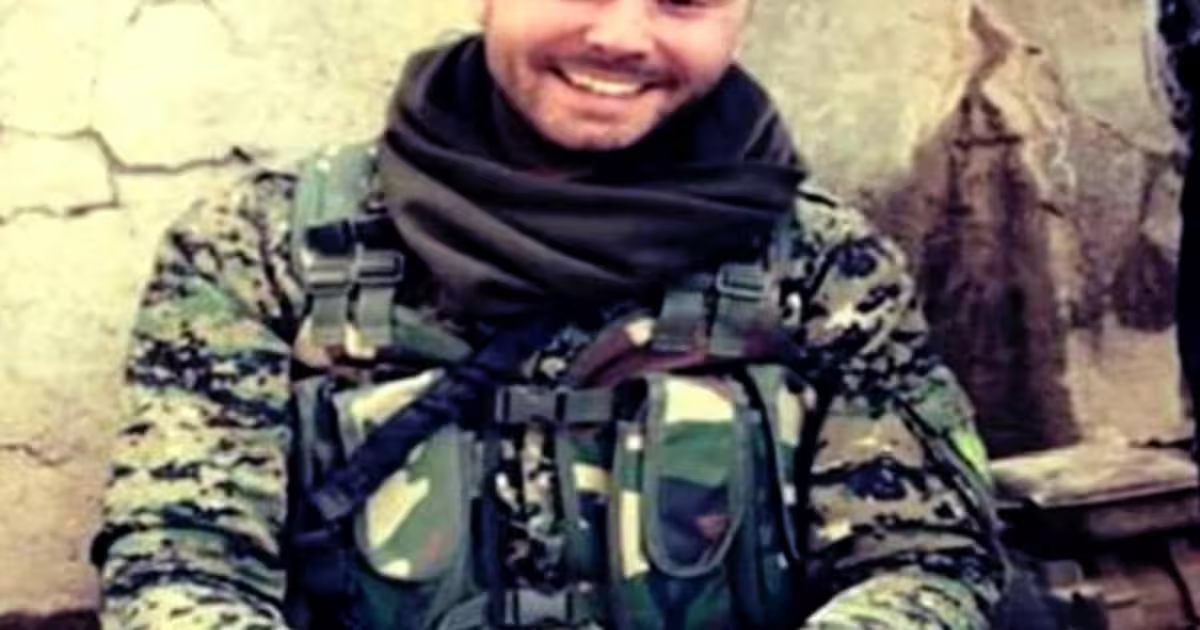
It was Susan who reluctantly let Melanie take him to Marbella in September 2017. He never returned. Susan called the police in the UK and a widespread media appeal followed, but Batty, Melanie and David could not be found. Batty was 11 when his grandmother reported him missing, and the case became one of the most closely watched child disappearance stories in Britain.
Batty said his childhood with his mother was spent partly off-grid, with no school and long stretches of instability. He lived in a tent at one point, sometimes ate just one meal a day and carried out manual labour for money. The documentary sends him back to Benifairó de les Valls, north of Valencia, where they hid for two months and where he tried to understand not only how he disappeared from view but how he was kept there.
He also confronted people he met while missing about why they did not contact services to help him. Batty later learned that some people did alert authorities in France, but the help never came. He said the experience “opened up my eyes”, but it also left him with anger that has not gone away. “My relationship with my mum, it's such a complicated thing,” he said, adding: “I'm annoyed at what she did... the experiences I missed out on and my lack of education.”
That mix of anger and curiosity appears to have driven him to contact Melanie again. The documentary is presented as a way for him to understand more about his mother and the years he lost, but it also underlines how little closure the case has delivered. Batty has returned home, started his own family and tried to build a life beyond the disappearance, yet the most personal thread in the story remains unresolved: how to speak to the parent who took him away, and what kind of answer, if any, he should expect.