


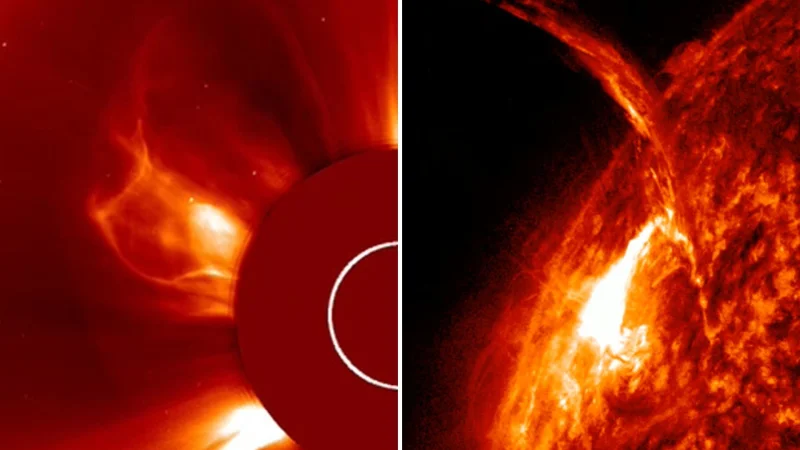
A powerful M5.7 solar flare erupted from the sun on May 10 and sent a coronal mass ejection racing outward that could give Earth a glancing blow tonight, according to space-weather forecasters. The flare peaked at 9:39 a.m. EDT, or 1339 GMT, and came from sunspot region AR4436.
That region is now rotating into Earth's strike zone on the sun's northeastern limb, and both NOAA's Space Weather Prediction Center and the U.K. Met Office said part of the expanding plume may brush past Earth around early May 13. If it does, forecasters said the encounter could bring minor G1 geomagnetic storm conditions and boost aurora displays across the northern U.S. and the U.K.
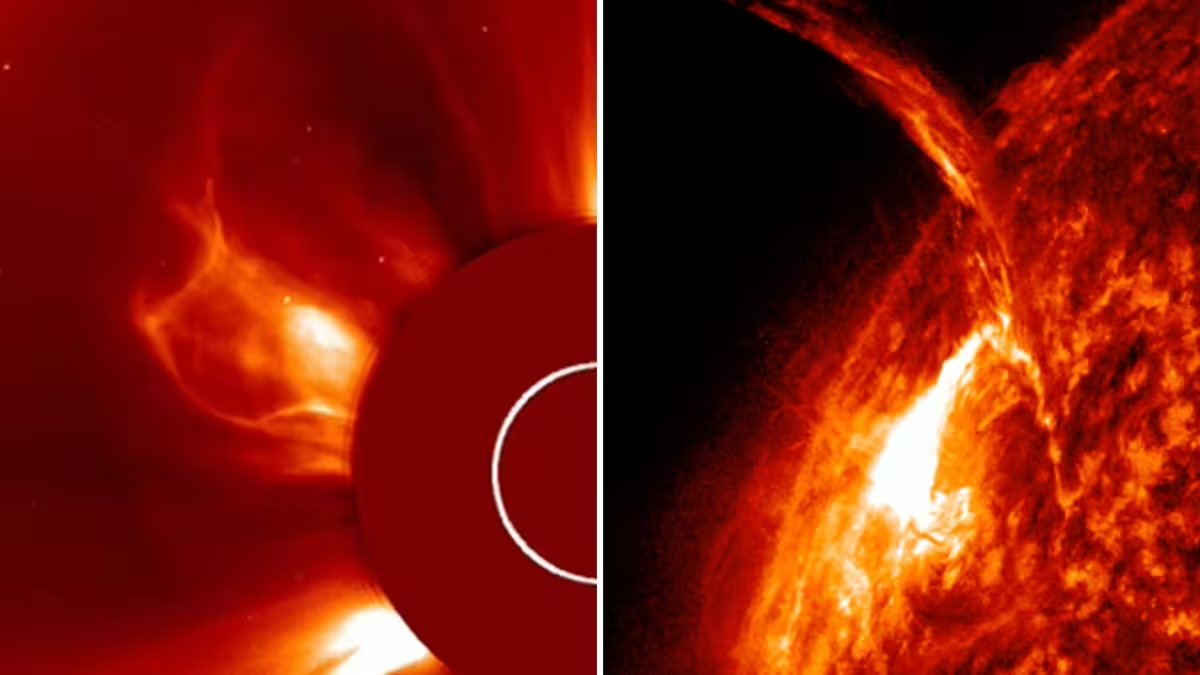
The May 10 eruption also triggered a radio blackout over the Atlantic Ocean, another sign that the flare briefly disrupted the near-Earth space environment. The agencies said there is still a chance of more solar activity in the coming days as AR4436 and AR4432 continue to evolve, with additional M-class flares possible and even X-class eruptions not ruled out.
The warning lands as viewers are already primed to watch the sky after a turbulent stretch for space weather. Solar flares are ranked A, B, C, M and X, with each step marking a tenfold jump in energy output and X-class storms at the top of the scale. But the latest CME is not expected to approach the extraordinary May 2024 storm, when Earth saw its first extreme G5 conditions since 2003 and auroras reached far beyond usual high-latitude ranges, including southern Florida and Mexico.
For now, the question is not whether the sun has turned active again, but how much of this latest blast actually intersects Earth. If the plume glances past as forecast, the result should be a modest geomagnetic disturbance and, for northern skywatchers, a better shot at seeing the northern lights without anything close to the scale of last year’s spectacle.