


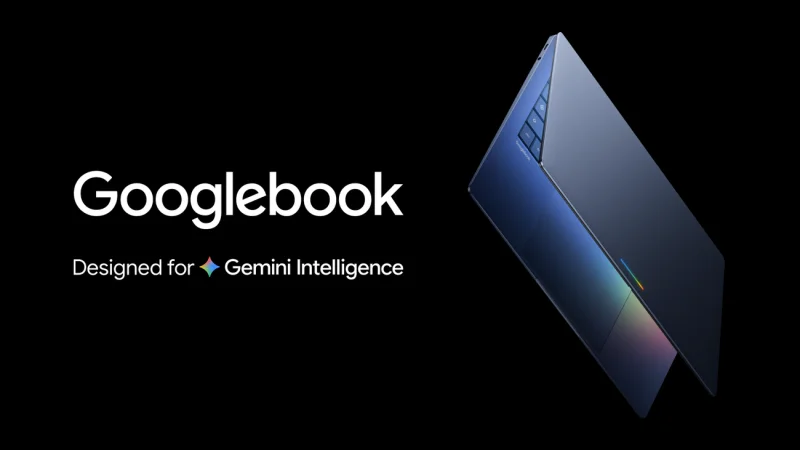
Google introduced Googlebook, a new category of laptops built from the ground up for Gemini intelligence, as the company said it is moving from an operating system to an intelligence system. The devices are designed to work with the phones and files people already use, and Google said they will launch this fall.
The launch marks Google’s latest attempt to redefine the laptop around its AI assistant rather than around a traditional operating system. Googlebook follows the Chromebook, which the company introduced more than 15 years ago, and the new line is meant to tie together Android, ChromeOS and Gemini in a single product category.

Google said Googlebook devices will be powered by premium hardware from top partners and will use Gemini to add features that react to what is on the screen. Magic Pointer can offer quick, contextual suggestions when users point at something, while Create your Widget lets people prompt Gemini to build custom widgets for organizing tasks.
Google also said Gemini can search the internet or connect to apps such as Gmail and Calendar to create one personalized dashboard. That pitch is aimed at making Googlebook feel less like a computer that waits for commands and more like a system that anticipates them, though the company’s broader claim is still untested in the market until the devices ship and users decide whether the new approach is useful enough to replace familiar laptops.
The launch gives Google a fresh opening to reset expectations after the Chromebook era, but it also raises a practical question: whether buyers will see Googlebook as a real leap forward or simply a new label on hardware that still has to prove itself in everyday use.