

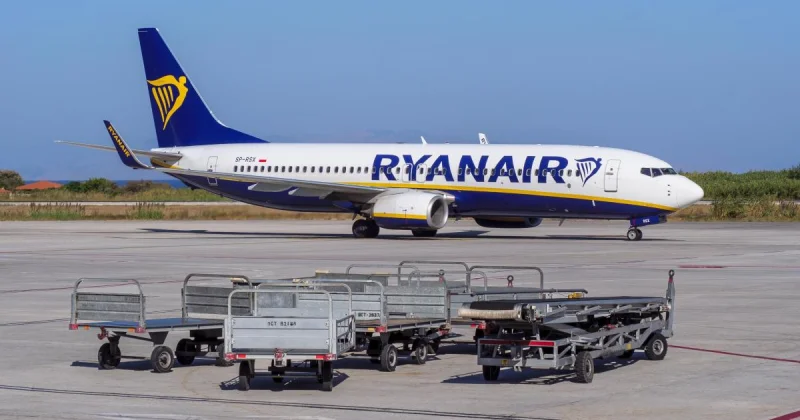
Ryanair will close its Thessaloniki base for the 2026 winter season, cut capacity at Athens Airport and suspend all operations at Chania and Heraklion during the off-peak months, the airline said on Thursday. The move will remove 700,000 seats and 12 routes across Greece.
The decision marks one of Ryanair’s sharpest pullbacks in Greece in recent years. Jason McGuinness, the carrier’s chief commercial officer, said the removal of three based aircraft would cut 500,000 seats from Thessaloniki alone, a 60% drop versus Winter ’25, after the airline said it provided 90% of international capacity to the city last winter.
McGuinness said the cuts were driven by high airport charges and by what Ryanair described as the refusal of Fraport Greece and Athens Airport to pass on government tax reductions. He said the company regrets the closure of the Thessaloniki base and the reductions in Athens for Winter ’26, and added that the changes would also affect routes linking Athens to Milan-M and Chania to Paphos.
Thessaloniki has become a flashpoint in Ryanair’s dispute with Greek airport operators because the airline says it has been forced to absorb costs that should have fallen after the government’s tax cut from November 2024. Ryanair said Fraport Greece has raised airport charges by 66% since 2019, a figure it used to argue that the market is no longer viable on the same terms.
The airline said the aircraft leaving Greece will not stay idle. They will be reallocated to Albania, regional Italy and Sweden, where Ryanair said airports have passed on their governments’ aviation tax savings. The company framed that shift as a straightforward trade: less flying in Greece, more connectivity, tourism and jobs elsewhere in Europe this winter.
McGuinness also said there would now be fewer low-cost fares for Thessaloniki’s residents and visitors, and that year-round tourism would suffer. He said the closure would be especially damaging because Ryanair had carried most of the city’s international traffic last winter and because the cuts would deepen Greece’s chronic seasonality, leaving the country more exposed to the winter slowdown that airlines have been urging policy makers to address.
Ryanair’s Greek retreat comes as the airline has also called for the European Union’s new entry/exit system to be suspended. The IT system, introduced in April, is designed to register non-EU nationals travelling for short stays of up to 90 days. Ryanair has not linked the system directly to the Thessaloniki decision, but it has made it part of a wider complaint that Europe is adding friction and cost at the same time it is trying to support travel.
For Thessaloniki, the immediate consequence is plain: fewer seats, fewer routes and fewer low-cost options heading into winter. Unless the airport dispute eases, Ryanair’s pullback suggests Greece is likely to keep losing traffic to markets that move faster to match the airline’s pricing demands.