


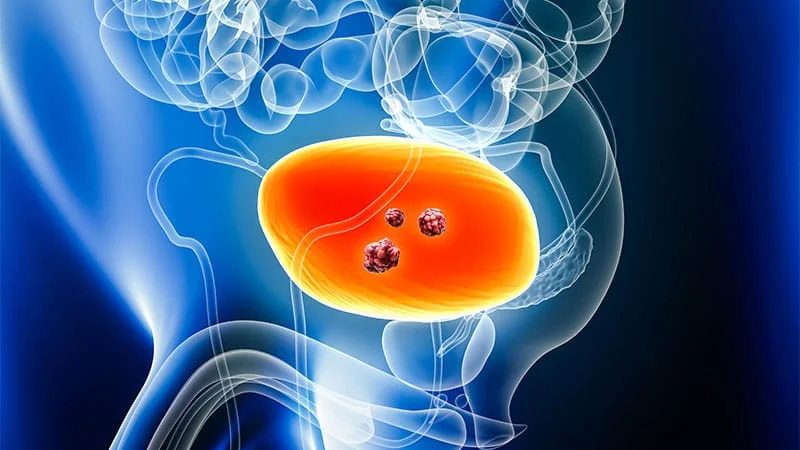
A drug combination that has already shown it can slow advanced bladder cancer and help patients live longer has been accepted for restricted use in NHS Scotland. The Scottish Medicines Consortium has approved enfortumab vedotin with pembrolizumab as a first-line treatment for adults with unresectable or metastatic urothelial cancer who are eligible for platinum-containing chemotherapy.
The restriction on pembrolizumab means treatment can continue for up to 2 years under the Scottish decision. Dr Robert Peel said the combination brings the most significant improvement in extending life expectancy for bladder cancer patients in a long time, a blunt measure of how little had changed for people facing a disease that can be lethal soon after diagnosis.
That matters because bladder cancer accounts for about 90% of urothelial carcinoma cases, and around 12% of patients present with unresectable or metastatic disease. For that group, the outlook is still poor: five-year survival rates are below 10%. The new recommendation gives doctors in Scotland a treatment option backed by the phase 3 EV-302 study, which enrolled 886 patients with untreated locally advanced or metastatic urothelial carcinoma.
In that trial, participants were randomly assigned to receive either enfortumab vedotin plus pembrolizumab or platinum-based chemotherapy. At a median follow-up of 29.1 months, the combination produced a median progression-free survival of 12.5 months, compared with 6.3 months for chemotherapy. Median overall survival reached 33.8 months versus 15.9 months, while the objective response rate was 68% with the combination and 44% with chemotherapy.
The safety profile also favored the newer regimen in some respects. Grade 3 or higher treatment-related adverse events occurred in 57% of patients given enfortumab vedotin plus pembrolizumab, compared with 70% of those receiving chemotherapy. The most common treatment-related problems with the combination were peripheral sensory neuropathy, pruritus and alopecia, while chemotherapy most often caused anaemia, neutropenia and nausea.
The dosing schedule is specific. Enfortumab vedotin is recommended at 1.25 mg/kg, up to a maximum 125 mg for patients weighing more than 100 kg, on days 1 and 8 of every 3-week cycle by intravenous infusion. Pembrolizumab is given at 200 mg every 3 weeks or 400 mg every 6 weeks by intravenous infusion, or 395 mg every 3 weeks or 790 mg every 6 weeks by subcutaneous injection. Treatment continues until disease progression or unacceptable toxicity.
Urothelial carcinoma includes cancers of the lower and upper urinary tracts, and the disease most often affects men and people older than 65. Smoking is linked to around half of diagnoses. Enfortumab vedotin is an antibody-drug conjugate that targets the Nectin-4 protein on urothelial cancer cells, while pembrolizumab is a humanised monoclonal antibody that binds to the PD-1 receptor on T-cells. The Scottish decision applies only under approved NHS Scotland Patient Access Scheme arrangements, which means access will be limited even as the drug pair moves into routine use for eligible patients. For people with metastatic cancer in this setting, the question is no longer whether the combination works, but how quickly it can reach those who need it.