


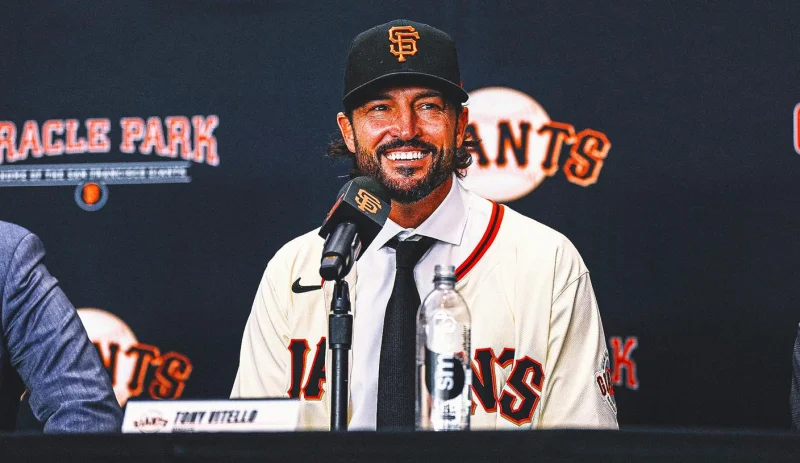
Rival executives are wondering how far the San Francisco Giants might go after the club traded catcher Patrick Bailey to the Cubs, and one name now circulating in that conversation is Jung Hoo Lee. Bob Nightengale of reported that the Giants would love to unload Lee, Willy Adames, Rafael Devers and Matt Chapman as part of a broader pivot that has caught the attention of the rest of the league.
The timing matters because the NL West race has already tilted hard toward the division leaders. The Padres and Dodgers are tied at the top, while the Giants are eight games back, a gap that makes San Francisco's direction the storyline inside the division as much as the standings themselves. If the Giants turn from trying to chase to trying to deal, the race effectively becomes a Padres-versus-Dodgers fight.
Nightengale's report also suggests San Francisco may not have the room to move those veterans as easily as it would like. He said the Giants likely do not have the flexibility to make unloading them simple, which is why Robbie Ray could emerge as the most realistic trade chip. Some executives believe the Giants have at least had to listen on Logan Webb, a sign that the club's thinking may have gone further than a routine midsummer reshuffle.
That possibility was easier to imagine before Memorial Day, when the Giants were already being described as a club that might look to move movable pieces. What changed is the scale of the discussion. Trading Patrick Bailey to the Cubs appears to have opened the door to a much wider question about whether San Francisco is preparing to step back from the race rather than keep spending to chase it.
For the Padres, the Giants' rumor mill is relevant because it changes the shape of the division chase. A San Francisco sell-off would leave San Diego and Los Angeles as the only teams directly competing at the top of the NL West, with the rest of the standings looking more like a backdrop than a battlefield. That is the real stake now: whether the Giants are trying to patch a gap or accept that the gap has become too large to close.