


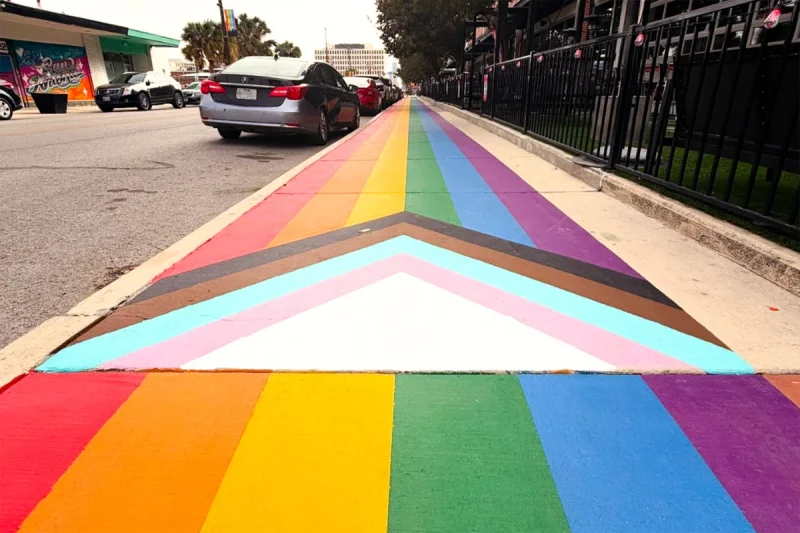
San Antonio’s Pride returned to the street in a different form this week, with portions of the sidewalk in the city’s Pride Cultural Heritage District painted in the colors of the Pride flag after state and federal pressure forced cities to pull back rainbow-painted crosswalks.
The change came after the rainbow crosswalk in the neighborhood, which had stood since 2018, was ordered removed. In its place, the city’s LGBTQ+ Advisory Board chose to put the Pride colors on the sidewalk, a move sparked by Councilman Jalen McKee-Rodriguez and carried out after the removal request.
The decision carries both symbolism and a price tag. About $170,000 is coming out of Public Works funding to remove the rainbow crosswalk and install the rainbow sidewalk, while the city also faces lawsuits from the Texas Conservative Liberty Forum over the use of public money and from Pride San Antonio, which sued to stop the crosswalk’s removal.
The fight began in October, when Texas Governor Greg Abbott directed cities to remove what he described as “any and all political ideologies” from the streets. Around the same time, Transportation Secretary Sean Duffy threatened to revoke federal funding from places that painted roadways with what he called “political banners.” Dallas, Austin and Houston were forced to remove their rainbow crosswalks, and Washington, D.C. removed its Black Lives Matter mural.
Mayor Gina Ortiz Jones said she had to weigh the broader consequences before deciding how far San Antonio could go. “I appreciate what our rainbow sidewalks represent. But, I’m the mayor of a major city in Texas, so I have to think about the consequences for everyone if our governor were to take away critical funding over this issue,” she said. Jones also said her pride “is not tied to this paint” but rather “in my heart and head.”
For people in the neighborhood, the dispute is not abstract. Michael Rendon said in March that some people in the community still felt unwelcome and unsafe, and he argued that the strip should remain a place where LGBTQ people and allies could gather, celebrate and feel accepted. “In 2026, there’s certain individuals, certain people of our community that still feel unwelcome and unsafe,” Rendon said. “This strip represents a place where people can come from the LGBTQ community and our allies and come and celebrate, build community. It’s a space where we can come together, be ourselves and welcome everyone from our community,” he said.
The result is a compromise shaped by legal threats, funding fears and a local desire to keep the district visible. San Antonio did not restore the original crosswalk, but it found a way to keep Pride on the street without directly defying the pressure that forced the rainbow from the roadway.