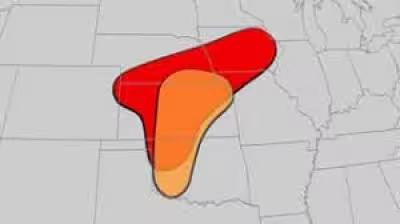


Millions of Americans across the central and western United States were under urgent fire weather warnings this week as the National Weather Service issued Red Flag Warnings across nine states. The alerts covered South Dakota, North Dakota, Nebraska, Kansas, Colorado, Montana, Utah, Arizona and California, with the broadest danger centered in the Northern Plains and the Rockies.
Most of the warnings were active from Wednesday afternoon, and some stretched into Thursday night, a window when fire risk tends to peak. That is when temperatures were at their highest, humidity was at its lowest and dry vegetation was most ready to burn. Highs ranged from the mid-80s to around 90°F, with hotter desert pockets possible, while grass, brush and forest fuel added to the danger.
The weather service described the setup as critical fire weather conditions. Winds can drive flames forward and carry embers, while dry air pulls moisture out of vegetation, turning ordinary sparks into fast-moving fires. For people driving on highways lined with dry grass, using power tools or machinery outdoors, or living in wildland-urban interface zones, the risk was immediate and practical, not theoretical.
That included routine actions that usually do not draw a second thought. Towing a trailer, firing up a grill or parking on dry grass could be enough to start a blaze under these conditions. The advice for people in affected areas was plain: keep water or extinguishers nearby when outdoors, and stay alert for smoke or sudden wind shifts.
The danger came from a volatile mix of hot, dry and windy weather layered over tinder-dry grass and brush, the kind of combination that can turn a small ignition into a larger fire in minutes. With the most widespread threats concentrated across the Northern Plains and Rockies, the forecast was not just a warning about weather. It was a warning about how quickly a normal day could become an emergency.
By Thursday night, the immediate concern was whether the strongest winds and driest air would ease soon enough to lower the odds of new ignitions. Until they did, the fire weather watch for these states meant that even small sparks had the potential to spread far beyond where they started.